|
|
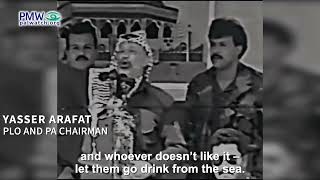
| Violence-Diplomacy strategy |
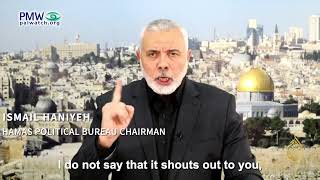
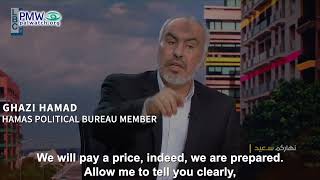
Palestinian leaders from both Fatah and Hamas argue that terror -- including suicide terror against Israel, which they call “resistance” or “armed struggle” -- is as a valid political tool, and should be combined with diplomacy. They refer to violence as “seeding,” which is followed by diplomacy; i.e. stopping terror in order to let diplomacy reap the fruits of the terror. Palestinians have argued that in recent years this tactic has proven to be a successful strategy.
Fatah say that Yasser Arafat represents the model, the “expert on the timing of seeding the [armed] struggle and reaping diplomacy.” [Al-Hayat Al-Jadida, Nov. 9, 2006]. Hamas argues that it has succeeded: “Praise to Allah, we [Hamas] have demonstrated glowing success in combining diplomacy and resistance.” [Hamas representative Ayman Taha, Al-Rissala, May 17, 2007].
Most importantly, the use of Palestinian terror is seen as a function of its profitability and the PA’s capabilities. As former Prime Minister Ahmad Qurei (Abu Alaa) said in August 2010 when asked if the Palestinians should be using armed “resistance”:
"I see and analyze. And if it [resistance] gives me [benefit] without costing me, yes." [Al-Hayat Al-Jadida, Aug. 5, 2010].
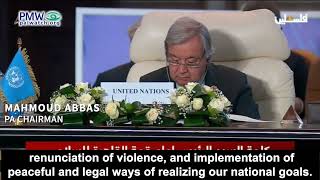
PA Chairman Mahmoud Abbas has expressed this sentiment as well: "Now (in 2008) we are against armed conflict because we are unable. In the future stages, things may be different. I was honored to be the one to shoot the first bullet in 1965 [Fatah terror against Israel began in 1965], and having taught resistance to many in this area and around the world, defining it and when it is beneficial and when it is not... we had the honor of leading the resistance. We taught everyone what resistance is, including the Hezbollah, who were trained in our [Fatah] camps." [Al-Dustur, Jordan, Feb. 28, 2008]
Palestinians across the political spectrum state that “armed resistance” is a valid tool. Moreover, if after the current stage of negotiations the Palestinians feel that they have not achieved their political demands, they will return to violence -- as soon as it is beneficial and they are able. |
|
| "The rifle seeds – Diplomacy reaps" |
|
|
|
|
The loftiest form of resistance is armed struggle
|
|
Source:
Palestinian TV (Fatah), Aug. 4, 2009
|
Jamal Huweil, elected to the Fatah Revolutionary Council at the General Fatah Conference, Aug. 4-6, 2009:
"The resistance is all-encompassing. That's what we learned in Fatah. It begins with hatred of the occupier in the mind, in the consciousness, and in the heart. It continues with Molotov cocktails, the stone, writing graffiti, boycotting Israeli products, and the loftiest [form of resistance] is the armed struggle. And we, praise to God, were among the greatest in carrying out this activity, but we do not act in vain.” |
|
|
|

|
|
Willingness to continue Fatah struggle will not end
|
|
Source:
Al-Filistiniya TV (Fatah Party), Aug. 4, 2009
|
Jamal Huweil, elected to the Fatah Revolutionary Council at the General Fatah Conference, Aug. 4-6, 2009:
"We [in Fatah] need a generation that is first of all capable of representing our young people, a generation that is capable of spearheading the next platform of the Fatah movement – whether on the subject of negotiations and the political process, to persuade this people about the political option, or the option of resistance. We have the greatest capability, and we still keep the embers of the resistance [alive] – and as you know, I came out of prison only 40 days ago. We still keep the embers of the resistance [alive] and are ready to continue on the path of our struggle, if we are clearly asked to do so by the Fatah movement – to continue with our struggle in all its forms. We are ready, with great willingness that will not lessen." |
|
|
|

|
|
Fatah military leader: Fatah leads in blending negotiations and terror
|
|
Source:
Ma’an, Palestinian news agency, Aug. 4, 2009
|
Zakariya Zubeidi, Former head of Jenin’s Fatah terror group, Al-Aqsa Martyrs, who received amnesty from Israel:
"Resistance can and should coexist with the strategy of negotiation with Israel, that has become identified with Fatah since the Oslo peace accords of the 1990s..."
Asked his views on the program of the Western-backed Palestinian Authority (PA) Prime Minister Salam Fayyad, Zubeidi smiled and said that he was happy that the PA security forces are being trained internationally. "I am happy that our army is trained in Jordan in Egypt, in Russia, in several countries all over the world," he said. "In case there is a future war, we will have some people who will be trained." |
|
|
|

|
|
Fatah: Will not abandon armed struggle as strategic choice
|
|
Source:
Palestinian TV (Fatah), July 29, 2009
|
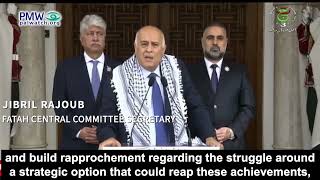
Jibril Rajoub, Member of the Fatah Revolutionary Council:
“Fatah arose to realize the independent Palestinian national identity as necessary factor in the equation of the conflict, by means of struggle in all its forms, foremost among them the armed struggle. [This principle] will not fall at the [Sixth] Conference, and there is no force in the world that can cause it to fall. And I say to you, all Fatah members – this is a strategic choice that is not subject to geography, nor to blackmail, nor to the place and time of the gathering of the Conference." |
|
|
|

|
|
Fatah: Force, armed struggle must support negotiations
|
|
Source:
Al-Filistiniya TV (Fatah Party), July 26, 2009
|
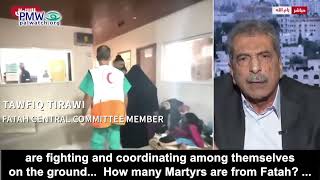
Tawfiq Tirawi, elected to the Fatah Central Committee at the General Fatah Conference Aug. 4-6, 2009:
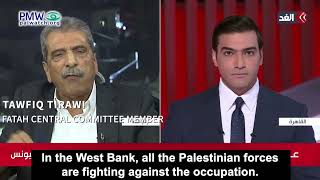
"Most members of the movement believe that it is imperative to emphasize, in the political platform of the Fatah movement, that we are still under occupation and that the legitimate resistance, in all its forms, must be re-considered… This doesn't mean that we don't want negotiations, but we don't want negotiations just for the sake of negotiations. There must be factors supporting the negotiations. The negotiations are [a type of] resistance, but they must be supported – supported by the stone, by demonstrations, by strikes, sit-ins, supported by all forms of the struggle, of which the greatest, or the most violent and the final [form] is the armed struggle. . . . The negotiations always need force to influence them positively." |
|
|
|

|
|
Fatah leader: Fatah coordinated terror with Hamas
|
|
Source:
Al-Filistiniya TV (Fatah Party), July 23, 2009
|
Jibril Rajoub, member of the Fatah Revolutionary Council:
"It was Fatah that carried out resistance; it was Fatah that coordinated the resistance with Hamas, not the security mechanisms or the security commanders. Do you understand me?" |
|
|
|

|
|
Fatah MP: Terror to be used "in the proper place and at the proper time"
|
|
Source:
Palestinian TV (Fatah), July 22, 2009
|
Muhammad Dahlan, Senior Fatah MP: "Regarding negotiations with Israel, we have to set a logical time limit of two years, in my opinion. The political plan guarantees the continuation of our national struggle in all its forms, in a way that will fulfill our national aspirations within this period of time."
PA TV Host: "[Does] the [violent] resistance and struggle continue?"
Muhammad Dahlan: "This is our right, a legal right. The international community affirms it for us. But it is the responsibility of the leadership to use it when it wants, in the proper place and at the proper time. We cannot leave it in the hands of youth who use their own judgment. This is the difference between [PA] using this right and just anyone using it. I lived with Chairman Yasser Arafat for years. Arafat would condemn [terror] operations by day while at night he would do honorable things. I don't want to say any more about this." Click here to view |
|
|
|

|
|
Fatah MP: Fatah still for armed resistance and does not recognize Israel
|
|
Source:
Al-Quds, July 22, 2009
|
Rafik Al-Natsheh, president of the Fatah Movement's Disciplinary Court, head of PA Parliament:
"The Fatah Movement will prove at its Sixth Congress to all the collaborators and know-nothings that it will continue to maintain the option of resistance in all its forms, and will not recognize Israel." |
|
|
|

|
|
|

|
|
PA: Weapons and abilities ready for armed struggle, waiting for Fatah timing
|
|
Source:
Palestinian TV (Fatah), July 19, 2009
|
Abbas Zaki, PA representative to Lebanon:
"We have UN General Assembly Resolution and Proposed Resolution 3236 [concerning] the use of all means of the struggle, including the armed struggle… The Palestinian people is once again waiting for the knights of the Fatah movement – and all of the factions look forward to the great wealth and reserve [of abilities] for the great struggle of the Fatah movement. This reserve [of abilities] must explode in the face of the enemy, rather than explode as a result of [the situation within] the disorganized family that currently prevails among us." |
|
|
|

|
|
PA official: Armed struggle still valid alternative to negotiations
|
|
Source:
Palestinian TV (Fatah), July 19, 2009
|
Interview with Head of PA National Guidance Directorate and former member of Fatah Supreme Council, Naef Switat:
Switat: "There is a major (central) enemy to the Fatah movement, and that is Israel..."
Interviewer: "Could there be a change in some of the strategies of the Fatah movement, over the course of the Sixth Congress, in the first sessions on the first and second day, in this regard, and especially [concerning] relations with Israel in this context?"
Switat: "To my view, there is a need to repair and improve the general policy, and especially the political platform. Meaning, the statement that negotiations are a strategic choice is a statement that does not solve problems, nor does it provide results. It is clear from [our] experience that that struggle and resistance are the natural right of every nation that is subjected to occupation, and negotiations are one of the means that should be used; it's not the only way. Whether the armed struggle is the only way or [whether] negotiations [is the only way] - neither this nor that is correct. Right now there is a need to create a political platform that will coordinate between the resistance and struggle in all its forms and negotiations as one of the forms of the struggle." |
|
|
|

|
|
Fatah member: Fatah goal is Palestine, not peace
|
|
Source:
Palestinian TV (Fatah), July 7, 2009
|
Kifah Radaydeh, Fatah Regional Committee member, Jerusalem
"Fatah is facing a challenge, because [Fatah] says that we perceive peace as one of the strategies, but we say that all forms of the struggle exist, and we do not rule out the possibility of the armed struggle or any other struggle. The struggle exists in all its forms, on the basis of what we are capable of at a given time, and according to what seems right...
What exactly do we want? It has been said that we are negotiating for peace, but our goal has never been peace. Peace is a means; and the goal is Palestine. I do not negotiate in order to achieve peace. I negotiate for Palestine, in order to achieve a state.”
Click to view video
Click to view bulletin |
|
|
|

|
|
Fatah official: The "resistance" brought about Oslo Accords
|
|
Source:
Al-Quds, Apr. 6, 2009
|
Sultan Abu al-Aynayn, Fatah Secretary General in Lebanon:
"The resistance [i.e. terror] brought about the Oslo Accords. There are 250,000 Palestinians who have returned to their homeland. The arms that were used against the Israeli enemy in Gaza and on other place."
Host: "More that 40,000 rifles."
Sultan Abu al-Aynayn: "Were brought [into the PA] in accordance with [Oslo] Accords. When we refer to the negative aspects of the Oslo Accords, we should also look at their other aspects." Click to view video |
|
|
|

|
|
Abbas: "We are against armed conflict because we are unable"
|
|
Source:
Al-Dustour (Jordan), Feb. 28, 2008
|
Mahmoud Abbas, PA Chairman:
"Now we are against armed conflict because we are unable. In the future stages, things may be different. I was honored to be the one to shoot the first bullet in 1965 [Fatah terror against Israel began in 1965], and having taught resistance to many in this area and around the world, defining it and when it is beneficial and when it is not... we had the honor of leading the resistance. We taught everyone what resistance is, including the Hezbollah, who were trained in our camps [i.e. PLO camps in the 60s]." |
|
|
|

|
|
Fatah leader defends Arabs' right to "struggle and resistance"
|
|
Source:
Palestinian TV (Fatah), Feb. 26, 2008
|
Mahmoud Ismail, member of the PLO Executive Committee:
"I want to cite the actions and future actions of President [Abbas], from the starting point that the Palestine cause is the essential and central cause of the Arab Nation. It's not surprising that [to] certain journalists of the current despicable American era, our [Arab nationalist] language of the 50s and 60s is outdated, when we talk about the nature of the struggle between the Arab Nation and its enemies: the Imperialists and Zionists, who attack and occupy our territories inside Palestine and outside, in Iraq, in the remains of South Lebanon and the Golan.
"We [however,] take pride in this [Arab nationalist] language because we are the authentic Arabs who believe in our Arabism, our faith, our cause, our Nation, in our right to struggle and to resistance [euphemism for terror] in all possible ways in all the occupied lands, in Palestine, Lebanon, the Golan and Iraq." |
|
|
|

|
|
Fatah spokesman: Fatah strategy combines violence with negotiations
|
|
Source:
Al-Quds, June 23, 2007
|
Ahmad Abd Al-Rahman, Fatah spokesman:
“Just as [armed] resistance to the occupation is an elementary form of the struggle, so the other aspect of this form of resistance is the path of negotiations and peaceful means… We base our struggle upon a dual strategy, which rests upon [armed] resistance and negotiations.” |
|
|
|

|
|
Diplomacy must be combined with violence to succeed
|
|
Source:
Al-Risala (Hamas website), May 21, 2007
|
Hamas representative to Palestinian Parliament, Ismail Al-Ashqar:
“’The world respects only the strong’ … He vaunted the achievements which Hamas has reaped, and also emphasized that the movement had succeeded in combining diplomacy with resistance.” |
|
|
|

|
|
|

|
|
Arafat was expert on timing of terror and diplomacy
|
|
Source:
Al-Hayat Al-Jadida, Nov. 9, 2006
|
Yasser Arafat, former PA Chairmen and PLO leader
“Yasser Arafat was an expert on the timing of seeding the struggle and reaping diplomacy… He taught us that diplomacy in the national struggle is like agriculture… He warned us that there is a time for harvest, which must not be early or delayed.” |
|
|
|

|
|
PA Minister: Oslo gave Palestinians the tools to wage the "great Intifada"
|
|
Source:
Al-Alam TV (Iran), July 4, 2006
|
Ziyad Abu Ein, PA Deputy Minister of Prisoners Affairs:
"The Oslo Accords are not the dream of the Palestinian people. However, there would never have been resistance in Palestine without Oslo. Oslo is the effective and potent greenhouse whish embraced the Palestinian resistance. Without Oslo, there would never have been resistance. In all the occupied territories, we could not move a single pistol from place to place. Without Oslo, and being armed through Oslo, and without the Palestinian Authority's "A" areas, without the training, the camps, the protection afforded by Oslo, and without the freeing of thousands of Palestinian prisoners through Oslo - this Palestinian resistance and we would not have been able to create this great Palestinian Intifda."
Click to view video
Click to view bulletin |
|
|
|
|
|
|
|
|
|
|
|