עברית
Ambassadors program


Entire Page


Violence-Diplomacy strategy
"The rifle seeds – Diplomacy reaps"
Violence-Diplomacy strategy
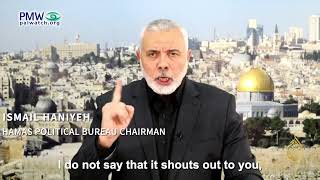
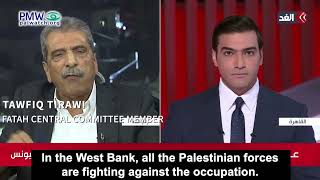
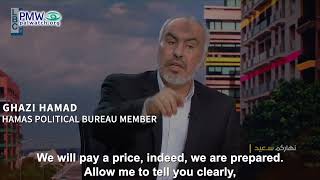
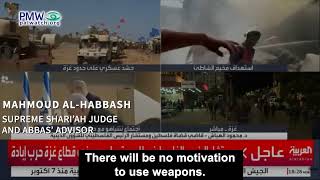
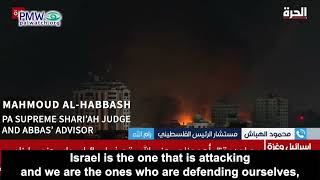
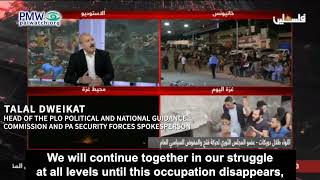
Palestinian leaders from both Fatah and Hamas argue that terror -- including suicide terror against Israel, which they call “resistance” or “armed struggle” -- is as a valid political tool, and should be combined with diplomacy. They refer to violence as “seeding,” which is followed by diplomacy; i.e. stopping terror in order to let diplomacy reap the fruits of the terror. Palestinians have argued that in recent years this tactic has proven to be a successful strategy.

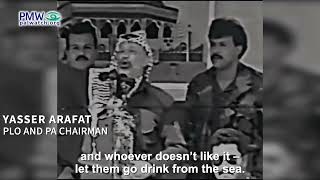
Fatah say that Yasser Arafat represents the model, the “expert on the timing of seeding the [armed] struggle and reaping diplomacy.” [Al-Hayat Al-Jadida, Nov. 9, 2006]. Hamas argues that it has succeeded: “Praise to Allah, we [Hamas] have demonstrated glowing success in combining diplomacy and resistance.” [Hamas representative Ayman Taha, Al-Rissala, May 17, 2007].

Most importantly, the use of Palestinian terror is seen as a function of its profitability and the PA’s capabilities. As former Prime Minister Ahmad Qurei (Abu Alaa) said in August 2010 when asked if the Palestinians should be using armed “resistance”:
"I see and analyze. And if it [resistance] gives me [benefit] without costing me, yes." [Al-Hayat Al-Jadida, Aug. 5, 2010].

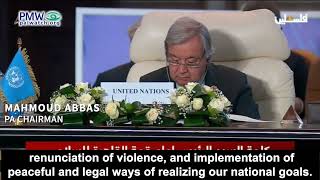
PA Chairman Mahmoud Abbas has expressed this sentiment as well: "Now (in 2008) we are against armed conflict because we are unable. In the future stages, things may be different. I was honored to be the one to shoot the first bullet in 1965 [Fatah terror against Israel began in 1965], and having taught resistance to many in this area and around the world, defining it and when it is beneficial and when it is not... we had the honor of leading the resistance. We taught everyone what resistance is, including the Hezbollah, who were trained in our [Fatah] camps." [Al-Dustur, Jordan, Feb. 28, 2008]

Palestinians across the political spectrum state that “armed resistance” is a valid tool. Moreover, if after the current stage of negotiations the Palestinians feel that they have not achieved their political demands, they will return to violence -- as soon as it is beneficial and they are able.
"The rifle seeds – Diplomacy reaps"
Palestinian goal: Destroy Israel in stages 
Source: Palestinian TV (Fatah), Feb. 4, 2005
Ibrahim Mudayris, Official, PA Ministry of Religious Trusts and Religious Affairs:
     "We might return to the 1967 borders by diplomacy, but we shall not return to the 1948 borders (i.e. eliminate Israel) by diplomacy. The 1948 borders- no one on earth recognizes as ours. Therefore we shall return to the 1967 borders, but we have not given up on (Israeli cities) Jerusalem and Haifa, Jaffa, Lod, Ramle and Tel Aviv. Never. Your father's blood was shed here, at the villages, at Ashqelon, Ashdod, Hirbia (all in Israel) and hundreds of villages and towns that demand it from us. [Their blood] shall curse anyone who will concede a grain of earth of those villages. The land of Palestine will demand the Palestinians return as Muhammad returned- as a conqueror."
Click here to view
PA cleric supports break in violence to prepare for "greater confrontation" 
Source: Palestinian TV (Fatah), Jan. 28, 2005
Ibrahim Mudayris, Official, PA Ministry of Religious Trusts and Religious Affairs: 
     "[The Hamas, etc.] responded sensibly, accepting the president [Abbas'] call for calm...and were convinced of the need for: "fighter's rest" because the interest demands we preserve our blood and our weapons for the greater confrontation."
Click to view video
Fatah leader: Negotiations are the "fighter's rest," return to violence is an option 
Source: Palestinian TV (Fatah), Jan. 10, 2005
Samir Al-Mashharawi, member of Fatah Central Committee:
     “Now [PA President] Mahmoud Abbas is suggesting the idea of negotiation. If we see that Abbas grants us an opportunity – by negotiations – for a national achievement with no casualties and no bloodshed on our side, [then] yes! What harm could it cause us? When all of the diplomatic doors are shut, as happened after the Oslo agreement, we have the Intifada (PA terror campaign, 2000-2005); we have our people; we have our perseverance in the resistance (violence). We view this period of negotiations as the “fighter’s rest.”
Click here to view
Fatah: We must include the rifle and a time for “fighter’s rest” 
Source: Palestinian TV (Fatah), Jan. 10, 2005
Samir Al-Mashharawi, member of Fatah Central Committee:
    “We of Fatah say – we must include all of this, and choose the right time for the rifle and the right time for negotiations... We may view this period devoted to negotiations as the ‘fighter’s rest’.”
Fatah Revolutionary Council member: The rifle seeds and diplomacy reaps 
Source: Palestinian TV (Fatah), Dec. 5, 2004
Diab Al-Luh, member of the Fatah Revolutionary Council:
     “We have learned in the struggle that there is a stage of planting and cultivation. The struggle of the rifle seeds and the diplomatic struggle reaps. We, the Palestinians, have planted in the many years of our struggle, our Shahids (Martyrs), our wounded and our brave prisoners, who have planted productive seeds.”
Click here to view
Palestinian “moderates” call to stop suicide terror “because we do not see results.” 
Source: Al-Quds, June 19, 2002
From petition signed by Hanan Ashrawi Sari Nusseibeh and others
     "We, the undersigned, out of our sense of national responsibility, and in light of the difficult situation of the Palestinian people, hope that those who stand behind the military actions against civilians in Israel, will reconsider their actions and will cease to encourage our boys to perform these operations, because we do not see results from these actions... We believe that these operations do not advance the fulfillment of our endeavor, for freedom and independence... Military actions are defined positively or negatively not by their own criteria [i.e. the success of the attack itself] but rather according to the achievement of political goals...“
PA Minister: Acceptance of Oslo to gain foothold; "struggle" will continue 
Source: Al-Ayyam, May 30, 2000
PA Minister of Supplies, Abd El Aziz Shahian:
     “The Palestinian people accepted the Oslo agreements to gain a foothold and not as a permanent settlement, since war and struggle on the land is more efficient than a struggle from a distant land…The Palestinian people will continue the revolution until they achieve the goals of the ’65 revolution…[i.e., destruction of Israel].”
PLO chief negotiator: PA plans to return to terror when negotiations break down 
Source: Private recording, Jan. 15, 1996
Nabil Shaath, chief PLO negotiator for 1993 Oslo Accords, at a closed meeting:
     "We decided to begin liberating our homeland step by step. This is the strategy. It is now impossible for the peace process to stop, for if it does, all the acts of violence will return to Israel. We say: Should Israel continue - no problem. And so we honor the peace treaties and non-violence, so long as the agreements are fulfilled step by step. [But] if and when Israel says "enough," namely - "we won't discuss Jerusalem, we won't return refugees, we won't dismantle settlements, we won't withdraw to the borders," in that case it is saying that we will return to violence. But this time, it will be with 30,000 armed Palestinian soldiers and in a land with elements of freedom. I'm the first one to call for it. If we get to a deadlock we shall return to the fighting and struggle, as we have fought for 40 years or more."  Click here to view
1234
Display all
More in this category
1- Video


Entire Page


Created by swat