






“Egypt says Israel is its number one enemy,” says Fatah leader
Egypt's military still designates "Israel as enemy number one" despite 50 years of Egyptian-Israeli diplomatic relations, according to Fatah Central Committee member Akram Al-Rajoub. Egypt understands that Israel "poses a danger to Arab existence":
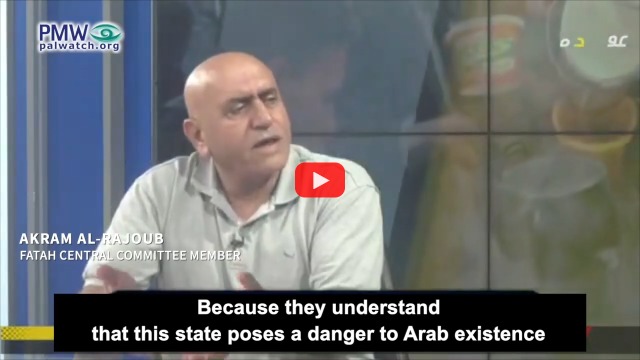
"Al-Rajoub: Why until now, despite 50 years of normalization and diplomatic relations with Egypt, does the security and military doctrine in the Egyptian army see Israel as enemy number one? It has not been erased from the Egyptian documents. Because they understand that this state poses a danger to Arab existence and that the Israelis have a strategic intention to eventually attack these regimes and these countries."
[Fatah-run Awdah TV, Facebook page, July 8, 2026]
Israel's own defense establishment is concerned that Egypt's military buildup in the supposedly demilitarized Sinai Peninsula, in violation of the 1979 peace treaty's security annex, suggests Cairo is preparing for the possibility of a future war with Israel — not solely fighting terror, as it claims.
Since the Hamas invasion of Oct. 7, 2023, Israeli officials and independent analysts have documented a sharp escalation in Egyptian violations of the treaty's Sinai demilitarization terms:
- Troop levels in the demilitarized Zones B and C — capped by treaty at 4,000 lightly armed police — have swelled to an estimated 40,000–66,000 soldiers permanently stationed in Sinai.
- In recent years, Egypt has invested tens of billions of dollars in canal tunnels, largely for civilian purposes yet built to military specifications to accommodate rapid troop and military hardware movements. if desired. Military analysts believe military tunnelling activity has also progressed.
- U.S.-made Abrams and Russian-made T-90 tanks have been deployed in Zone C, adjacent to Israel and Gaza, where the treaty permits only police with light weapons.
- Egypt has extended runways at the Umm Khashiba and Rafid air bases to accommodate fighter jets, and built new airfields, inside restricted zones.
- Israeli intelligence has identified underground facilities in Sinai it suspects are intended for missile storage.
- HQ-9B long-range air-defense systems have been installed in zones previously off-limits to such weaponry.
- Egypt has curtailed Multinational Force and Observers (MFO) patrols and monitoring flights that are supposed to verify treaty compliance.
- Camp infrastructure has reportedly been built to accommodate up to 180 battalions, versus the 47 permitted under the agreement.
- Egypt's defense minister spoke in 2025 of Cairo's "readiness to block maritime routes to Israel," while Egypt expands Sinai ports, including the new Rafid Port.
The scale of the buildup has alarmed Israel's top leadership. Prime Minister Netanyahu personally raised the violations with U.S. Secretary of State Marco Rubio in September 2025, and again warned the Knesset's Foreign Affairs and Defense Committee in February 2026 that "the Egyptian army is getting stronger and we need to monitor it to prevent excessive buildup".
Taken together with Al-Rajoub's admission that Egypt's own military doctrine names Israel "enemy number one," the pattern feeds a fear shared by many Israeli security officials: that Egypt is not merely reinforcing Sinai against terrorism, but positioning itself for a scenario in which it could one day find itself at war with Israel again. As Al-Rajoub inadvertently confirmed, that possibility has never been struck from Egypt's own strategic playbook.
There exists a popular assumption that once a peace agreement is struck it means peace will take hold and endure. However, the failed Oslo Accords framework and the Palestinian Authority's cauldron of hate it introduced vividly disprove that.
There are worrying signs that Egypt's peace with Israel could one day suffer a similar fate - and that if it's ever in Egypt's interest to attack Israel, the peace treaty may be discarded.